



Chevrolet / Chevy P0455 PO455: EVAP Large Leak Explained
What Does Chevrolet / Chevy P0455 Mean?
P0455 means the vehicle detected a large leak in the EVAP system.
EVAP (Evaporative Emissions) is the system that keeps fuel vapors from escaping into the air. During a self-test, the vehicle seals the EVAP system and checks whether it can hold pressure or vacuum. If it can’t seal well enough, it stores DTC P0455.
PO455 is usually just a typo people make when they read the code (letter O instead of zero 0).
Quick Fix Order
If someone asks “p0455 code chevy—what part do I need?” this is the best order to check things:
-
Gas cap (loose, cracked, bad seal)
-
Visible EVAP hoses/lines (cracked, disconnected, broken fitting)
-
Vent valve / vent solenoid (stuck open, contaminated, corrosion)
-
Purge valve / purge solenoid (won’t close, leaks like a vacuum leak)
-
Smoke test to confirm the exact leak point
This order helps avoid random part swapping and reduces returns.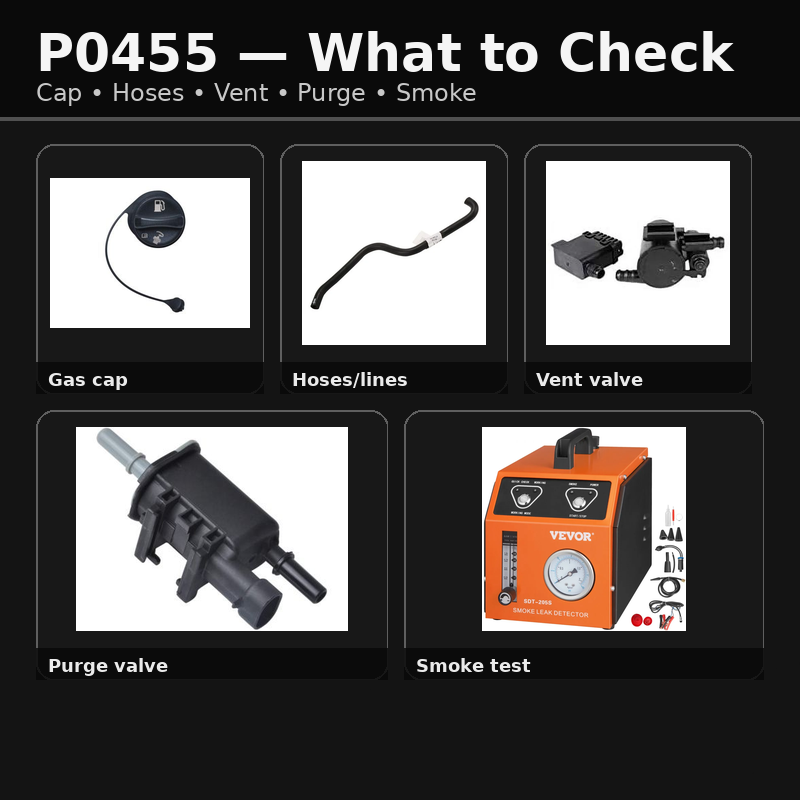
Why People Search “Chevrolet Code P0455”
When customers search dtc p0455 chevrolet or a large leak in EVAP, they’re usually trying to answer:
-
Is it serious?
-
Can I keep driving?
-
Will I fail emissions?
-
What part should I replace?
-
How do I fix it without wasting money?
For parts sellers, P0455 is valuable traffic because buyers are often ready to act—but it’s also risky, because the code doesn’t point to only one part.
Is P0455 Serious?
Most of the time, P0455 is not an emergency and the vehicle still drives normally. However:
-
The Check Engine Light stays on
-
Many vehicles will fail emissions / inspection
-
Some drivers notice a fuel smell, especially with bigger leaks
If a customer reports a strong fuel smell, advise them to inspect sooner rather than later.
Common Symptoms
Many customers only see the warning light, but these clues help narrow down the cause:
-
Check Engine Light (most common)
-
Fuel smell near the vehicle (sometimes)
-
Code appears after filling up (very common)
-
Rough idle / hard starting (often points to purge valve issues)
Why rough idle can matter: if the purge valve sticks open, it can act like a vacuum leak, which may cause rough idle or starting trouble.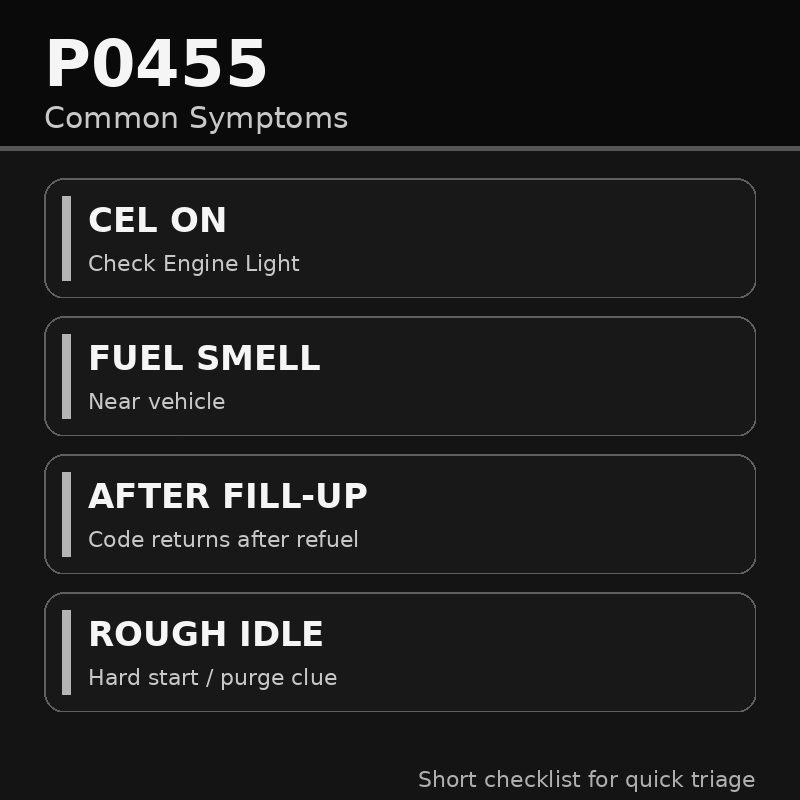
Most Common Causes of “A Large Leak in EVAP”
P0455 is a “system can’t seal” code. These are the most common real-world causes:
1) Loose or faulty gas cap (fuel cap)
This is the #1 cause. A loose cap or worn seal can trigger P0455 quickly—often right after refueling.
2) EVAP vent valve / vent solenoid stuck open
Vent valves can stick due to dirt, moisture, or corrosion (common on trucks/SUVs that see dust, rain, or road salt).
3) EVAP purge valve / purge solenoid leaking or not closing
If the purge valve doesn’t close fully, the EVAP system may never seal during the self-test.
4) EVAP hose/line damage
Cracked rubber hoses, broken plastic lines, or loose quick-connect fittings can create a large leak.
5) Charcoal canister damage or saturation
The canister can crack or get damaged. Overfilling the fuel tank (topping off after the pump clicks) can also cause EVAP problems over time.
30-Second Question Script
When someone says “p0455 chevy silverado” or “p0455 chevy equinox,” don’t guess. Ask these six questions:
-
Year + model (Silverado, Tahoe, Equinox, Impala, Traverse)
-
Engine size (or ask for VIN for exact match)
-
Any other codes? (P0442, P0456, P0496, etc.)
-
Did it start right after refueling?
-
Any rough idle / hard starting?
-
Any fuel smell?
This makes your recommendation more accurate and cuts down “wrong part” returns.
Easy Diagnosis Steps
This is a simple checklist that most readers can follow.
Step 1: Check and tighten the gas cap
-
Make sure it’s installed correctly
-
Tighten until it clicks (if applicable)
-
Inspect for cracks or a flattened seal
If the cap is old and the seal looks worn, replacement is often a smart first step.
Step 2: Do a quick visual check of EVAP lines
Look under the vehicle (as safely as possible) for:
-
disconnected hoses
-
cracked lines
-
broken plastic fittings
-
loose quick-connects
Step 3: Use the symptoms to choose the next likely part
-
Code after refueling + no drivability issues: cap/filler area is most likely
-
Rough idle/hard start: purge valve becomes more likely
-
Truck/SUV or harsh environment: vent valve and underbody lines become more likely
Step 4: Smoke test (best way to confirm)
If basic checks don’t find the issue, a smoke test is the fastest way to locate the leak.
Common Reference Part Numbers (Gas Cap, Purge Valve, Vent Valve)
Important fitment note: EVAP components can vary by year, engine, emissions package, and build location. The part numbers below are reference numbers commonly seen in catalogs. Always verify fitment using VIN or your catalog before ordering or shipping.
1) Gas cap (fuel filler cap)
-
GM OE 10372246 (Fuel Tank Filler Cap)
When it makes sense: code shows up after refueling, cap is old, no rough idle.
2) EVAP purge valve / purge solenoid
-
GM OE 12597567 (EVAP purge control valve / purge solenoid)
When it makes sense: rough idle or starting issues, or code returns after replacing cap.
3) EVAP vent valve / vent solenoid
-
ACDelco 214-2082 (Vapor Canister Vent Solenoid)
When it makes sense: trucks/SUVs, dusty/salty conditions, cap didn’t fix it.
Part And Part Number
| EVAP Part | What It Does | When It’s a Common P0455 Fix | Reference Part Numbers (Confirm Fitment) |
|---|---|---|---|
| Gas cap (fuel cap) | Seals the fuel system | Light comes on after refueling; cap seal looks worn | GM 10372246 |
| Purge valve / purge solenoid | Controls vapor flow from canister to engine | Rough idle/hard start, or code returns after cap replacement | GM 12597567 |
| Vent valve / vent solenoid | Helps seal/vent EVAP system during leak test | Trucks/SUVs, dust/salt exposure, code returns after basics | ACDelco 214-2082 |
Model-Specific Notes
People often search by model. Here are safe, helpful starting points without overpromising:
-
P0455 Chevy Silverado / Tahoe: underbody EVAP parts see more dust, water, and road salt, so vent valve + lines are common check points.
-
P0455 Chevy Equinox / Traverse: check the gas cap first, then focus on purge valve behavior if drivability issues show up.
-
P0455 Chevy Impala: gas cap and purge-related issues are common starting checks; confirm by year/engine.
The correct part still depends on the exact year and engine—so VIN confirmation is the best practice.
Common Mistakes That Waste Time And Cause Returns
These are simple, but they matter:
-
Replacing the purge valve before checking the gas cap
-
Ignoring cracked EVAP lines near the canister
-
Topping off the tank after the pump clicks (can damage EVAP components)
-
Shipping parts without confirming the year/engine/VIN
FAQ
Why did my Chevy get P0455 after I got gas?
Most often, the gas cap wasn’t fully tightened or the cap seal is worn.
Can I drive with P0455?
Usually yes, but you may fail emissions, and the light will stay on until fixed.
Does P0455 always mean I need a purge valve?
No. P0455 means the EVAP system can’t seal. Common causes include the cap, vent valve, hoses/lines, purge valve, or canister.
What’s the fastest way to find the leak?
A smoke test is the fastest and most accurate way once basic checks are done.