



Chevy Lower Pressure P0299 Code Cruze Trax Equinox Malibu
If you’re dealing with Chevy P0299, whether it’s on a P0299 Chevy Malibu like the one in this case, a P0299 Chevy Cruze, P0299 Chevy Trax, or P0299 Chevy Equinox. This blog shares my step-by-step solution to a stubborn turbocharger underboost issue. The 2017 Chevy Malibu XL came in with an illuminated check engine light and poor acceleration. After thorough diagnosis, I traced the problem to a broken wastegate actuator link. I’ll break down the symptoms, diagnostics, and fix that works for any Chevrolet model throwing P0299 Code Chevy or PO299.
Fault Symptoms
A 2017 Chevy Malibu XL with a 1.5T engine and 118,000 km on the odometer arrived at the shop. The owner reported two main issues: an illuminated check engine light and a noticeable loss of acceleration power. During a road test with the owner, I confirmed both symptoms. The check engine light stayed on, and the vehicle struggled to pick up speed even when the accelerator was pressed firmly. This is a common scenario for Chevy P0299 across models like the P0299 Chevy Cruze and P0299 Chevy Equinox.
Diagnostic Process
Step 1: Scan for Trouble Codes
Using a diagnostic scanner, I retrieved the historical fault code P0299, which indicates turbocharger underboost. The Engine Control Module (ECM) sets this code when it detects actual boost pressure is lower than the expected value. This code is identical for P0299 Code Chevy vehicles regardless of model.
Step 2: Identify Potential Causes
Based on my experience with Chevy P0299, the main causes of turbocharger underboost include:
1. Leaks in the intake system after the turbocharger
2. Damage to turbocharger components such as the turbine, wastegate, or control devices
3. Restrictions in the intake or exhaust systems
Step 3: Analyze Freeze Frame Data
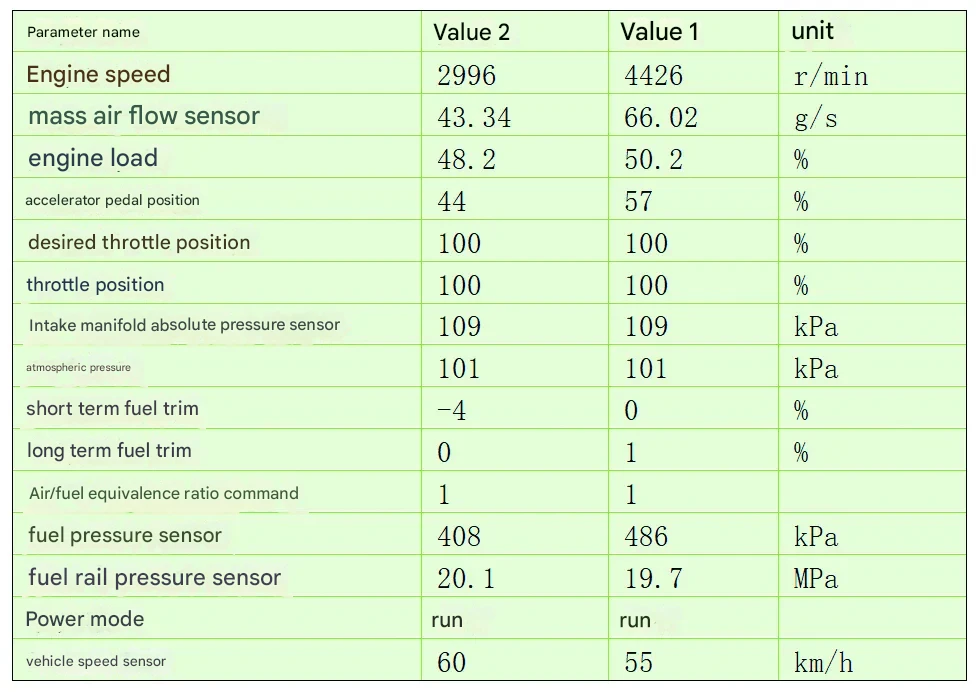
I connected the diagnostic scanner for a road test to capture freeze frame data during acceleration. Key findings from the data included:
• Vehicle speed: 55 to 60 km/h during acceleration
• Accelerator pedal position: 44% to 57%
• Throttle position: 100%, indicating full acceleration
• Intake manifold absolute pressure: 109 kPa (well below the expected 200+ kPa for full boost)
• Mass air flow: 43.34 to 66.02 g/s (far short of the 100+ g/s needed for proper boost)
• Long-term fuel trim: 0 to 1%, which is within the normal range
The normal long-term fuel trim was a crucial clue. If there were a leak after the turbocharger, pressurized air would escape, leading to a rich air-fuel mixture and negative long-term fuel trim values. This data helped me rule out intake leaks early.
Step 4: Verify Intake System Integrity
To confirm no leaks existed, I performed a pressure test on the intake system between the turbocharger and throttle body:
1. Covered the air filter outlet and throttle body with multiple layers of plastic film
2. Reinstalled the intake hose and secured the clamps
3. Connected a radiator pressure gauge to the crankcase ventilation hose fitting
4. Pressurized the system to over 150 kPa and monitored for pressure loss
The pressure remained stable, confirming no leaks in the intake system. This step is essential for diagnosing PO299 in any Chevy model.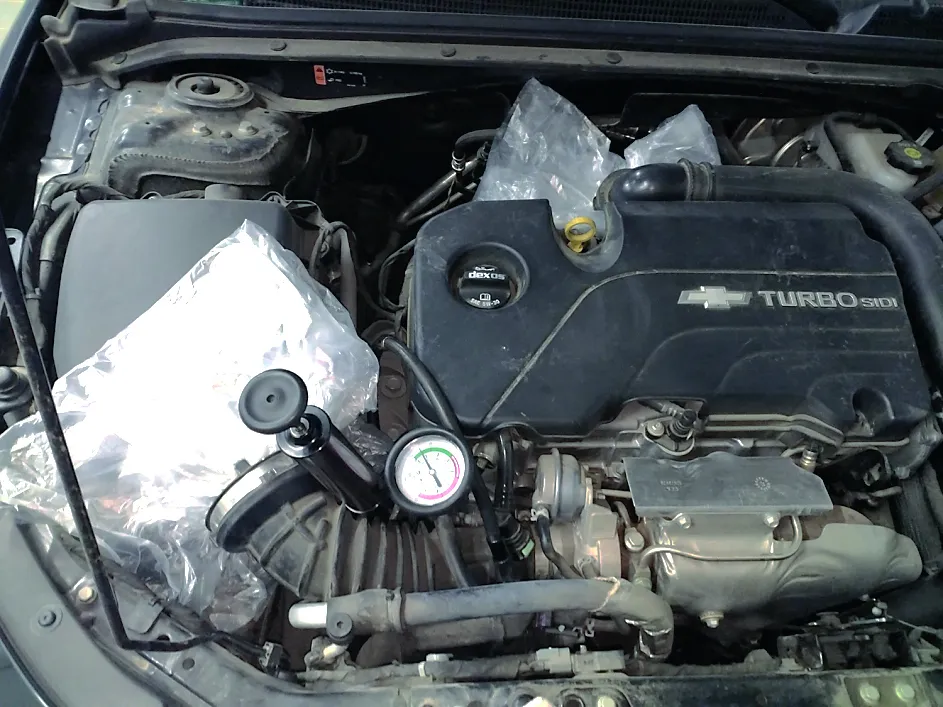
Step 5: Rule Out Intake and Exhaust Restrictions
I inspected the air filter and intake pipes for blockages and found no issues. I also tested the exhaust system by manually increasing engine speed. The intake manifold pressure responded normally, indicating no exhaust restrictions. This eliminated another common cause of Chevy P0299.
Step 6: Understand Pressure Relationships
Before inspecting the turbocharger, I clarified key pressure definitions to avoid diagnostic errors:
• Boost pressure: A relative value calculated by subtracting atmospheric pressure (101 kPa) from the absolute pressure measured by the boost pressure sensor
• Boost pressure sensor value: Absolute pressure in the intake pipe after the turbocharger
• Desired boost pressure: The target pressure determined by the ECM based on engine load
• Intake manifold absolute pressure: Measures vacuum changes in the intake manifold based on engine load
By comparing the desired boost pressure and intake manifold absolute pressure during acceleration, I confirmed the turbocharger was not meeting the ECM’s pressure requirements. The data showed a significant gap between the two values.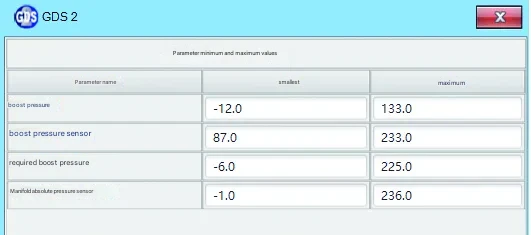
Step 7: Inspect the Turbocharger
Upon removing the turbocharger, I discovered the root cause: a broken link on the wastegate actuator. This broken link prevented the wastegate from closing properly, allowing exhaust gases to bypass the turbine and reducing boost pressure. This is a common failure point for Chevy P0299 in models like the P0299 Chevy Malibu and P0299 Chevy Trax.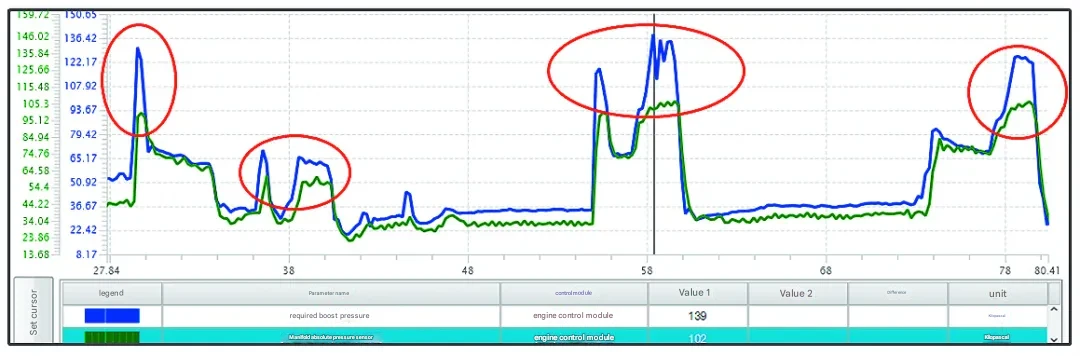
Fault Resolution
I replaced the turbocharger wastegate actuator with a new unit. After installation, I performed a road test to verify the fix. The acceleration performance returned to normal, and the check engine light stayed off. Post-repair data showed the desired boost pressure and intake manifold absolute pressure were nearly identical, confirming the turbocharger was now operating correctly. This solution is effective for any Chevrolet model with the P0299 Code Chevy caused by wastegate actuator issues.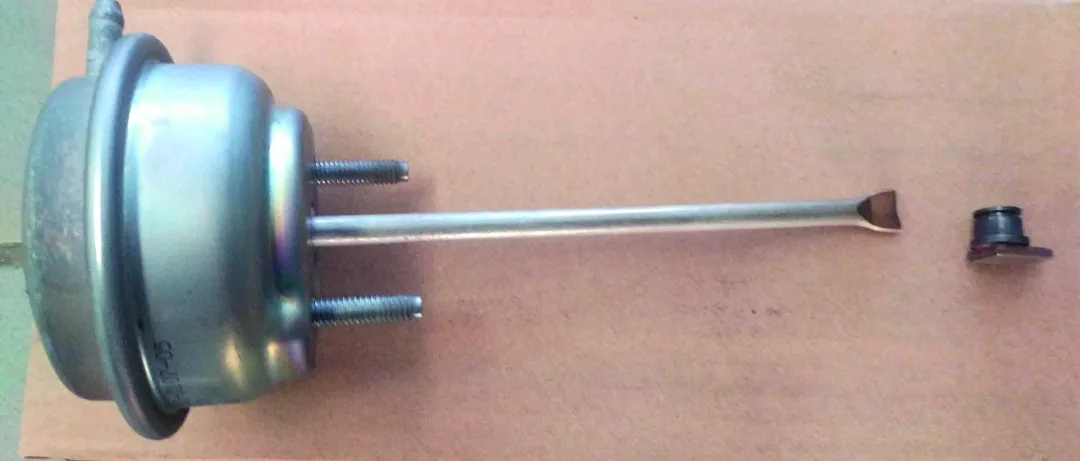
Key Diagnostic Tips for Chevy P0299
Fixing this Chevy P0299 case taught me valuable lessons applicable to all Chevy models:
1. Master pressure data interpretation. Comparing the desired boost pressure and intake manifold absolute pressure is the fastest way to assess turbocharger performance.
2. Use alternative testing methods when road testing isn’t feasible. You can check turbo performance by disabling traction control and performing a stall test using the parking brake to load the engine while stationary, or securing the front brakes on a lift and accelerating in drive.
3. Use long-term fuel trim data to rule out leaks. Normal values (0 to 5%) indicate no post-turbo leaks, while negative values suggest air loss.
4. Perform a pressure test to confirm intake system integrity. This simple test saves time by eliminating leaks as a potential cause early in the diagnostic process.
Final Thoughts on Chevy P0299
Chevy P0299 or PO299 is a common but solvable issue for turbocharged Chevrolet vehicles. Whether you drive a P0299 Chevy Malibu, P0299 Chevy Cruze, P0299 Chevy Trax, or P0299 Chevy Equinox, the diagnostic process remains consistent. Start with code scanning, analyze data to narrow down causes, and verify each potential issue systematically.
The most critical step is understanding the relationship between key pressure values and using fuel trim data to rule out leaks. In many cases like this one, the problem stems from a simple mechanical failure like a broken wastegate actuator link rather than a complete turbocharger replacement.
If you’re not comfortable performing these diagnostics, a qualified mechanic can apply these steps to resolve the P0299 code in Chevy efficiently. Addressing turbocharger underboost early prevents further engine strain and maintains optimal performance.