



Chevy P0442 / PO442: EVAP System Leak (Small Leak)
What It Means and What to Check First
If your scan tool shows chevy P0442 (sometimes typed as PO442), it usually means your vehicle detected a small leak in the EVAP system. The EVAP system captures fuel vapors from the gas tank and routes them to the engine to be burned instead of letting them escape into the air.
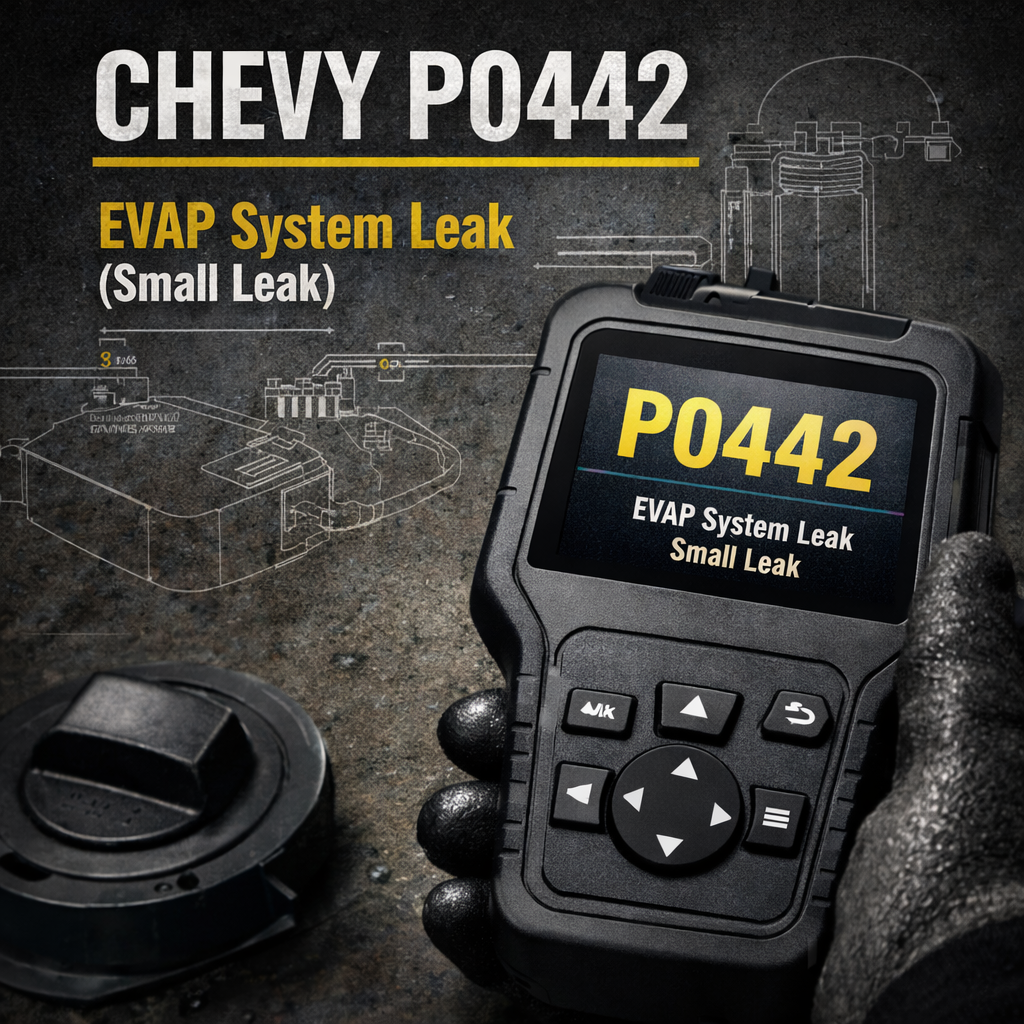
This code is common on many Chevy models, including searches like p0442 code chevy, p0442 chevy silverado, p0442 chevy traverse, p0442 chevy impala, p0442 chevy cruze, and p0442 chevy malibu—because the EVAP system works in a similar way across most vehicles.
What P0442 means
P0442 = “Evaporative Emission Control System Leak Detected (Small Leak)”. In simple terms: during a self-test, the computer tried to seal the EVAP system and noticed it couldn’t hold pressure/vacuum the way it should.
Good to know: With P0442, many drivers notice no symptoms other than the Check Engine light. Some people may notice a faint fuel smell after parking.
Is P0442 serious? Can you keep driving?
In most cases, yes—you can keep driving if the car feels normal. P0442 is usually an emissions/sealing issue, not a “pull over now” problem.
Still, it’s worth fixing because:
-
You may fail an emissions inspection or readiness check while the code is active.
-
The issue can come and go, and the light may distract you from new problems later.
-
If there’s a vent-side problem, some drivers also notice trouble fueling (the pump clicks off early).
Stop and get help sooner if you have a strong fuel smell, visible wet spots near the tank area, or drivability issues that feel unsafe.
Common causes of P0442 on Chevy (highest probability first)
Here are the most common reasons this code shows up:
-
Loose, damaged, or wrong gas cap (very common)
-
Cracked EVAP hose or a loose/broken connection
-
Purge valve (purge solenoid) not sealing properly
-
Vent valve / vent solenoid issue
-
Charcoal canister damage or related lines leaking
A “small leak” can be caused by something as simple as a hardened rubber seal—or a tiny crack in a plastic line.
5 quick checks you can do at home (DIY-friendly)
You don’t need special tools for the first pass. A flashlight helps.
1) Re-seat the gas cap (don’t skip this)
-
Remove the cap.
-
Check the rubber seal for cracks, hard spots, or debris.
-
Reinstall and tighten it until it clicks.
A loose cap is a common cause of P0442.
Real-world clue: The light came on soon after you filled up.
2) Clear the code and see if it returns
This step is about learning whether the issue is repeatable.
-
Clear the code with a scan tool.
-
Drive normally for a few days.
Important: clearing the code doesn’t fix anything—it just resets the warning until the vehicle runs its EVAP self-test again.
Real-world clue: It comes back after a couple of days or after the next fill-up.
3) Look for obvious hose and connector problems
Check:
-
cracked rubber hoses
-
broken plastic lines
-
loose quick-connect fittings
Auto repair guides list hoses and connections as key suspects for this code.
Real-world clue: The car is older, or it’s been through lots of heat/cold cycles.
4) If idle/start feels weird, move “purge valve” up your list
The purge valve helps control when fuel vapors are pulled into the engine. If it leaks when it shouldn’t, it can trigger EVAP codes.
Real-world clue: Rough idle, a stumble, or a hard start (especially after fueling). Not every car will show these symptoms, but if you do, it’s a helpful hint.
5) If fueling is difficult, check the vent/canister area
Some vehicles become harder to fill when there’s a blockage or issue around the EVAP vent side.
Real-world clue: The pump keeps clicking off early, or you can’t fill at normal speed.
When a smoke test is the smartest next step
P0442 is a small leak, which can be very hard to find just by looking. A smoke test pushes smoke through the EVAP system so the leak becomes visible.
If you’ve already:
-
confirmed the gas cap is good,
-
checked lines you can see,
-
and the code keeps coming back,
Then a smoke test is often the fastest way to stop guessing.
Model notes (Silverado / Traverse / Impala / Cruze / Malibu)
P0442 is a generic code, so the “top suspects” are similar across models. What changes is access and what tends to wear out first.
-
P0442 Chevy Silverado: Underbody lines and connections can take more road grime and debris, so inspect the tank-area lines and connectors carefully.
-
P0442 Chevy Traverse: More plumbing and connections can mean more places for a small leak—take your time with hose/connector checks.
-
P0442 Chevy Impala / Malibu: Gas cap and aging seals/hoses are common starting points.
-
P0442 Chevy Cruze: Many owners start with the gas cap and then focus on EVAP valves/lines if the code returns. (The right fix still depends on year/engine.)
Replacement part numbers (read this before you buy anything)
It’s normal to want a “P0442 part number,” but here’s the key point:
There is no universal part number for P0442. The correct EVAP parts vary by year, engine, emissions package, and build date, even within the same model name.
A safer approach:
-
Diagnose the failed component (cap vs hose vs purge valve vs vent valve), then
-
Match the part using your VIN in a fitment catalog.
This prevents the common problem of buying a “close enough” part that doesn’t actually seal right.
Quick FAQ
Why do some people write “PO442”?
Usually it’s a typo: the zero in P0442 looks like the letter O.
Will P0442 hurt my engine?
Most of the time, no. It’s mainly an emissions system issue, and many cars drive normally with this code.
What’s the #1 thing to check first?
The gas cap and its seal. It’s cheap, quick, and listed as a common cause by multiple repair references.
Simple next step checklist (copy/paste)
-
✅ Tighten and inspect the gas cap
-
✅ Clear code, drive for a few days, see if it returns
-
✅ Inspect visible EVAP hoses and connectors
-
✅ If rough idle/hard start: suspect purge valve earlier
-
✅ If fueling trouble: look at the vent/canister area
-
✅ If it keeps returning: schedule a smoke test