



Chevy P0700 Code Silverado Malibu Cruze Shift & Stall
2026-01-05
Recently, I handled a tricky transmission issue on a Chevrolet Cruze: the vehicle would occasionally stall and experience erratic gear shifts while driving, with the engine warning light illuminating eventually. The core clue during diagnosis was the Chevy P0700 code, also known as PO700 or Chevy code P0700, which indicates the transmission control module (TCM) has requested the malfunction indicator lamp to turn on. Alongside it, I found P0842 and P2723 codes in the TCM. After a series of tests, including road trials and transmission inspections, I ultimately traced the problem to a faulty output shaft speed sensor.
In this blog, I’ll walk you through the full troubleshooting journey. While this case focuses on the p0700 Chevy Cruze, the diagnostic logic applies to other Chevy models like the p0700 Chevy Silverado and p0700 Chevy Malibu that commonly throw the same Chevy p0700 code.
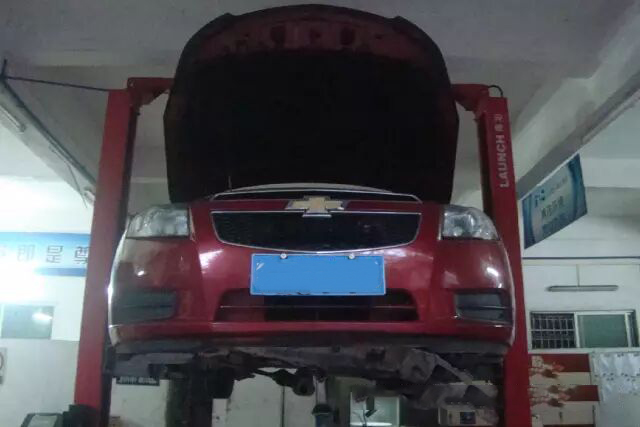
In this blog, I’ll walk you through the full troubleshooting journey. While this case focuses on the p0700 Chevy Cruze, the diagnostic logic applies to other Chevy models like the p0700 Chevy Silverado and p0700 Chevy Malibu that commonly throw the same Chevy p0700 code.
1. Vehicle Info & Customer’s Disturbing Complaint
The vehicle in question was a Chevrolet Cruze with an automatic transmission (specific details like year weren’t specified, but the issue is typical for Cruzes prone to p0700 chevy cruze). The customer reported several alarming symptoms: during high-speed driving, the car had experienced sudden automatic braking multiple times, accompanied by a loud noise from the front of the chassis. After slowly pulling over and restarting, the fault would temporarily disappear. Eventually, the engine warning light came on, prompting them to seek professional repair.
This combination of stalling, abnormal braking, and warning lights is a classic red flag associated with Chevy P0700, as the code signals underlying transmission control system issues that can disrupt normal driving dynamics.
This combination of stalling, abnormal braking, and warning lights is a classic red flag associated with Chevy P0700, as the code signals underlying transmission control system issues that can disrupt normal driving dynamics.
2. Initial Diagnosis: Uncovering Chevy P0700 & Associated Codes
My first step was to scan all control units for stored fault codes, a critical step when dealing with Chevy P0700, as this code itself is a "warning flag" rather than a specific fault point. The results were revealing: in the transmission control module (TCM), two codes were present: P0842 (Transmission Fluid Pressure Switch 1 Circuit Low Voltage) and P2723 (Pressure Control Solenoid 5 Stuck Off). In the engine control unit (ECU), there was one key code: Chevy P0700 (Transmission Control Module Requested MIL Illumination). This confirmed that the transmission system was the root cause, and the P0700 Chevy code was triggered by the TCM detecting internal faults.
To verify the symptoms, I conducted a road test. While I didn’t replicate the "sudden automatic braking" described by the customer, I did observe a critical issue: when the transmission was in 4th or 5th gear (or higher), it would suddenly drop to 1st gear, accompanied by abnormal noises from the transmission and abrupt deceleration. This violent downshifting is a common manifestation of transmission control system failures linked to Chevy P0700, similar to what I’ve seen in P0700 Chevy Silverado repairs. Given all signs pointed to the transmission, I decided to disassemble it for further inspection.
3. Transmission Tear Down & Preliminary Checks
After disassembling the transmission, I thoroughly inspected its internal mechanical components, including gears, clutches, and bearings, but found no signs of damage or wear. This was puzzling, as the fault symptoms and codes strongly suggested a transmission issue. Before reassembling, I focused on the components related to the P0842 and P2723 codes: Pressure Control Solenoid 5, Pressure Switch 1, the 1-4 gear clutch regulator valve, the clutch booster valve, and their associated oil circuits. Again, no abnormalities were found, no clogs, leaks, or component malfunctions. This meant the problem wasn’t with the mechanical or hydraulic components directly, so I needed to shift my focus to the electrical control system.
4. Road Test with Data Logging: Key Clues Found
After reassembling the transmission, I performed another road test, this time using a professional diagnostic tool to log real time data from the TCM. After an extended drive, the fault finally reappeared while passing through a downhill curve: the car shook several times and experienced intermittent momentary power loss, though the symptoms disappeared quickly. While not identical to the customer’s description, this confirmed the issue was active.
Analyzing the logged data revealed a critical anomaly: the vehicle speed suddenly dropped from approximately 40 km/h to 0, then quickly returned to 40 km/h; the output shaft speed also plummeted from 1,100 r/min to 0 before bouncing back. In reality, the vehicle’s actual speed had not changed at all; such extreme fluctuations were physically impossible. This discrepancy was a key breakthrough. Further analysis showed that both the vehicle speed and output shaft speed data in the TCM were monitored by the transmission output shaft speed sensor. This meant the sensor or its related components were likely faulty, even though no direct fault codes for the sensor were stored.
5. Final Fault Localization & Resolution
I then focused on inspecting the transmission output shaft speed sensor and its related components. On this Cruze model, both the output shaft speed sensor and TCM are located inside the transmission. I removed the transmission side cover and TCM from the vehicle, then inspected and measured the wiring between sensor B14A and the TCM’s X4 connector. No short circuits, open circuits, or poor connections were found. I also checked the sensor’s tone wheel by rotating the front wheels while observing through the sensor mounting hole again, no damage or abnormalities were detected on the tone wheel teeth.
Despite the lack of obvious physical damage, the data anomaly strongly indicated a faulty sensor. I decided to replace the transmission output shaft speed sensor as a targeted repair. After installing the new sensor and reassembling all components, I conducted repeated tests and road trials. The results were perfect: the fault symptoms no longer appeared, all data in the TCM returned to normal, and there were no more instances of stalling or erratic gear shifts. The Chevy P0700 code and associated codes were cleared and did not reappear, the fault was completely resolved.
6. Repair Review & Key Takeaways
This case taught me valuable lessons about Chevy P0700 and transmission system diagnostics. First, the generation of fault codes P0842 and P2723 was related to driving conditions, road conditions, and the specific operating state of the vehicle when the output shaft speed sensor malfunctioned. Importantly, the TCM did not recognize the sensor as faulty; instead, it interpreted the erroneous speed data as normal, leading to incorrect transmission control commands (like sudden downshifting) and triggering fault codes when the system reached a critical threshold.
Second, this Cruze model has two separate speed calculation systems:
1) The TCM calculates speed via the output shaft speed sensor to determine transmission line pressure, shift patterns, torque converter clutch (TCC) slip speed, and gear ratios;
2) The ABS control unit calculates speed via the four-wheel speed sensors for ABS and ESP control, and provides speed signals to other modules (like the instrument cluster) . This explains why the speedometer on the instrument panel showed no obvious fluctuations when the output shaft speed sensor failed; only data logging could reveal the hidden anomaly. This is a crucial point for diagnosing p0700 Chevy Cruze issues, as the lack of obvious speedometer errors can easily mislead technicians.
1) The TCM calculates speed via the output shaft speed sensor to determine transmission line pressure, shift patterns, torque converter clutch (TCC) slip speed, and gear ratios;
2) The ABS control unit calculates speed via the four-wheel speed sensors for ABS and ESP control, and provides speed signals to other modules (like the instrument cluster) . This explains why the speedometer on the instrument panel showed no obvious fluctuations when the output shaft speed sensor failed; only data logging could reveal the hidden anomaly. This is a crucial point for diagnosing p0700 Chevy Cruze issues, as the lack of obvious speedometer errors can easily mislead technicians.
Finally, the root cause of the customer’s "sudden automatic braking" was clarified: when the vehicle was actually traveling at high speed, the faulty sensor sent extremely low or even 0 speed signals to the TCM. The TCM mistakenly believed the vehicle was moving slowly or had stopped, so it commanded the transmission to downshift to 1st gear or even shift to neutral. This sudden downshift caused severe deceleration, which the customer perceived as "automatic braking."
Final Thoughts
The Chevy P0700 code (PO700) is a common issue across many Chevrolet models, from the P0700 Chevy Cruze to the P0700 Chevy Malibu and P0700 Chevy Silverado. It’s important to remember that Chevy P0700 is not a specific fault itself but a signal that the TCM has detected a problem. When troubleshooting, don’t rely solely on fault codes; always combine them with road tests and real time data logging, especially when dealing with intermittent issues.
If you’re facing a Chevy P0700 code and symptoms like stalling or erratic gear shifts, don’t overlook the transmission output shaft speed sensor. Even without direct fault codes for the sensor, erroneous speed data can cause major transmission malfunctions. For complex transmission issues, it’s best to consult a professional technician with specialized diagnostic tools.