



P0011 Chevy Code Equinox Cruze Malibu Silverado Sonic
2025-12-25
Recently, I tackled a challenging Chevy P0011 case on a Chevrolet Epica that had just undergone an engine replacement. The vehicle was throwing the Chevy P0011 code (also known as PO011, intake camshaft phasing system fault) along with P0014 (exhaust camshaft position adjustment fault), and there was a noticeable engine noise during acceleration. After systematic diagnosis, from scanning fault codes and analyzing data streams to inspecting the oil system, I traced the root cause to a clogged check valve between the cylinder head and block, filled with red sealant debris.
Thoroughly cleaning the oil passages and replacing the check valve resolved the issue completely. While this case involves a Chevy Epica, the diagnostic logic for Chevy P0011 applies to other Chevy models like the P0011 Chevy Cruze, P0011 Chevy Equinox, and P0011 Chevy Silverado, as oil system issues are a common trigger for this code.
Thoroughly cleaning the oil passages and replacing the check valve resolved the issue completely. While this case involves a Chevy Epica, the diagnostic logic for Chevy P0011 applies to other Chevy models like the P0011 Chevy Cruze, P0011 Chevy Equinox, and P0011 Chevy Silverado, as oil system issues are a common trigger for this code.
1. Vehicle Info & Customer’s Complaint
The vehicle in question was a Chevrolet Epica that had just had its engine replaced. The customer reported two main issues shortly after the replacement: the check engine light came on, and there was an unusual noise from the engine when accelerating.
They had taken the car back to the shop that did the engine replacement, but the problem wasn’t resolved, so they brought it to me for a professional diagnosis. This kind of post repair issue with Chevy P0011 is not uncommon, and I’ve seen similar scenarios with P0011 Chevy Malibu and P0011 Chevy Impala models after major engine work.
They had taken the car back to the shop that did the engine replacement, but the problem wasn’t resolved, so they brought it to me for a professional diagnosis. This kind of post repair issue with Chevy P0011 is not uncommon, and I’ve seen similar scenarios with P0011 Chevy Malibu and P0011 Chevy Impala models after major engine work.
2. Initial Diagnosis: Uncovering Chevy P0011 & P0014 Codes
My first step was to connect a diagnostic scanner to the engine control unit (ECU) to retrieve fault codes. The scan results confirmed the presence of Chevy P0011 (Intake Camshaft Phasing System Fault) and P0014 (Exhaust Camshaft Position Adjustment Fault). The Chevy P0011 code is a common trouble code in Chevy vehicles, indicating that the ECU has detected an issue with the intake camshaft’s variable valve timing (VVT) system. Next, I took the vehicle for a test drive to verify the symptoms: indeed, when accelerating, there was a distinct noise coming from the engine bay.
To pinpoint the source of the noise, I used an automotive stethoscope. The sound was clearly emanating from the cylinder head area. Based on my experience with Chevy P0011 cases, whether on a P0011 Chevy Sonic or a P0011 Chevy Silverado, this kind of noise during acceleration is typically related to the variable timing system. This initial assessment guided my subsequent diagnostic steps.
3. In Depth Troubleshooting: Data Stream Analysis & Solenoid Test
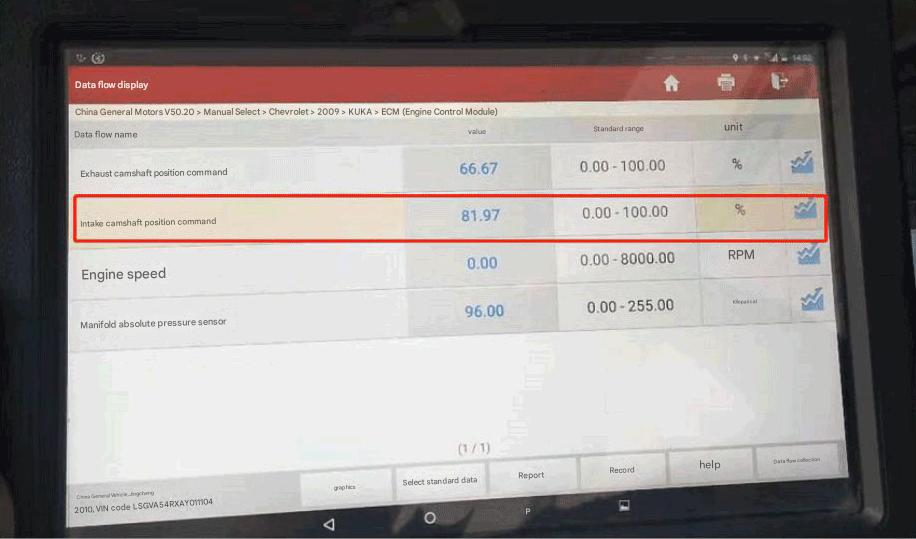
I then started the engine and monitored the real time data stream from the ECU, focusing on camshaft phasing parameters. A key finding emerged: at idle, the intake camshaft phasing adjustment command was 81%, while the normal range for this parameter in healthy Chevy vehicles is around 66%. This deviation confirmed that the VVT system was not operating correctly, which aligned with the Chevy P0011 code.
To further isolate the issue, I disconnected the electrical connector of the camshaft phasing solenoid. Immediately, the engine noise disappeared. This was a crucial clue: it suggested that the noise was directly related to the operation of the VVT system. When the solenoid was disconnected, the VVT system stopped functioning, eliminating the noise source. This test also helped rule out mechanical issues unrelated to the VVT system, such as worn bearings or damaged valves.
4. Oil Pressure Inspection: A Critical Step for Chevy P0011
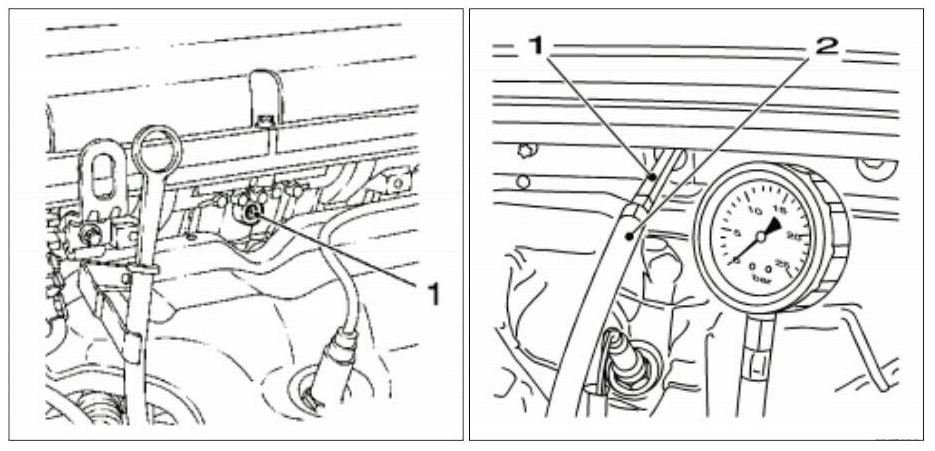
Since the VVT system relies on proper oil pressure to operate, checking oil pressure was the next logical step. Following the guidelines in the Chevy repair manual, I measured the engine oil pressure after the engine reached normal operating temperature. The procedure was as follows:
- Removed the plug bolt (1).
- Cleaned the threads, then installed the EN49423 pressure gauge with the EN49418 adapter (1).
- Started the engine.
- Checked the oil pressure: at idle, the oil pressure in the main oil gallery was 180 kPa, which met the manual’s requirement (minimum 130 kPa at idle with oil temperature > 80℃ / 170°F).
While the main oil gallery pressure was normal, the noise characteristics and the solenoid test results led me to conclude that the issue was poor hydraulic lifter performance. Further analysis revealed that the hydraulic lifters were not working properly due to low oil pressure in the cylinder head oil passages. This explained why increasing the engine idle speed or disconnecting the camshaft phasing solenoid made the noise disappear.
5. Oil System Disassembly: Locating the Clogged Check Valve
To find why the cylinder head oil pressure was low, I analyzed the composition of the Chevy engine’s oil system, which includes the oil strainer, oil pump, cylinder block and head assembly, piston oil jets, VVT system components, and oil cooler assembly (including the oil filter and filter base). I disassembled the oil cooler and inspected it carefully, focusing on the pressure relief valve on the filter base. Fortunately, the relief valve was not stuck and returned to its normal position.
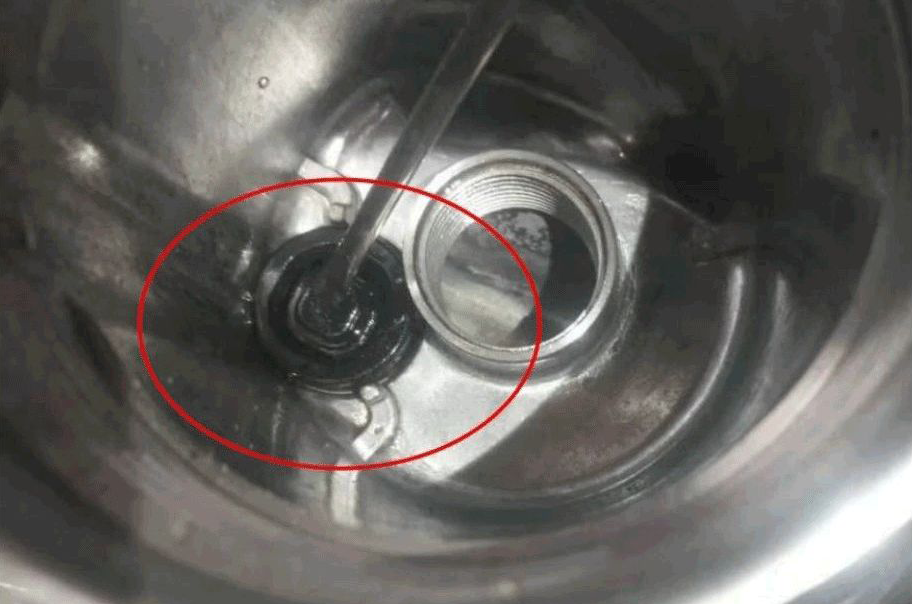
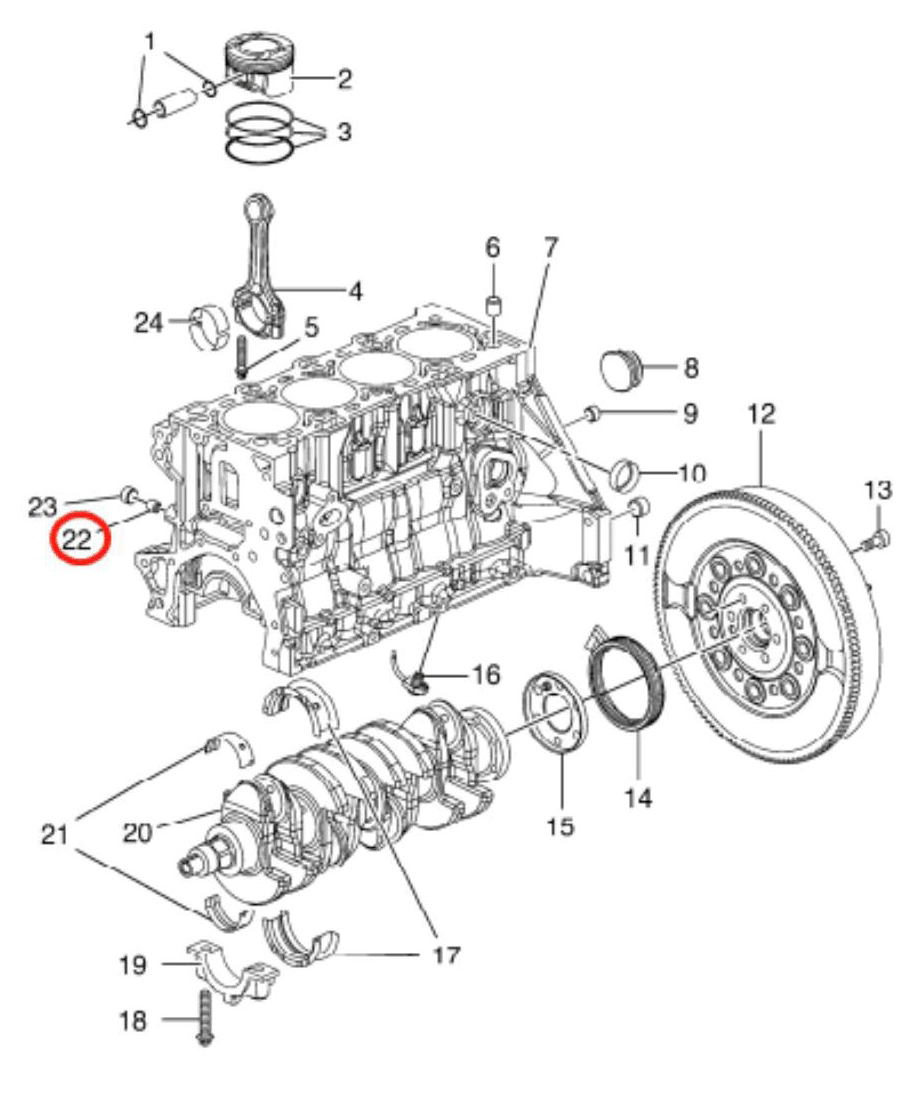
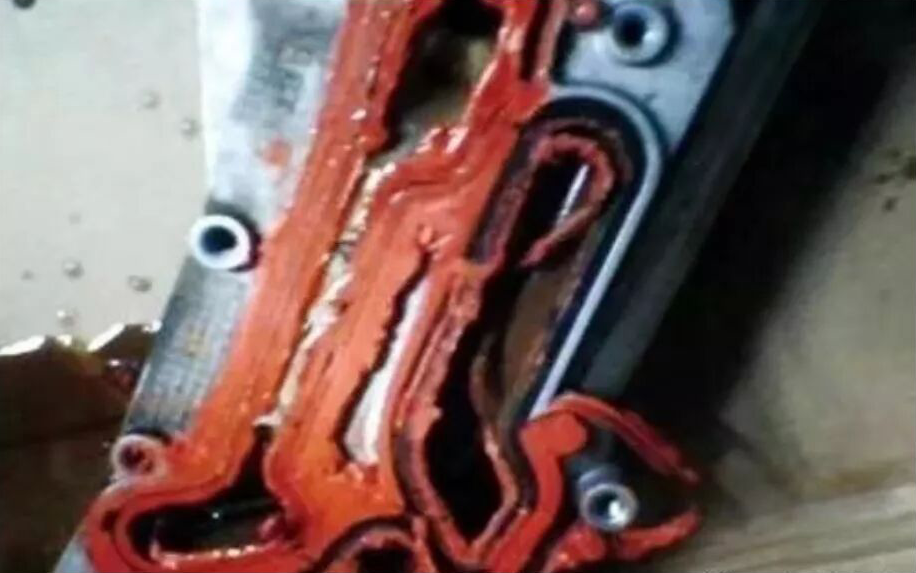
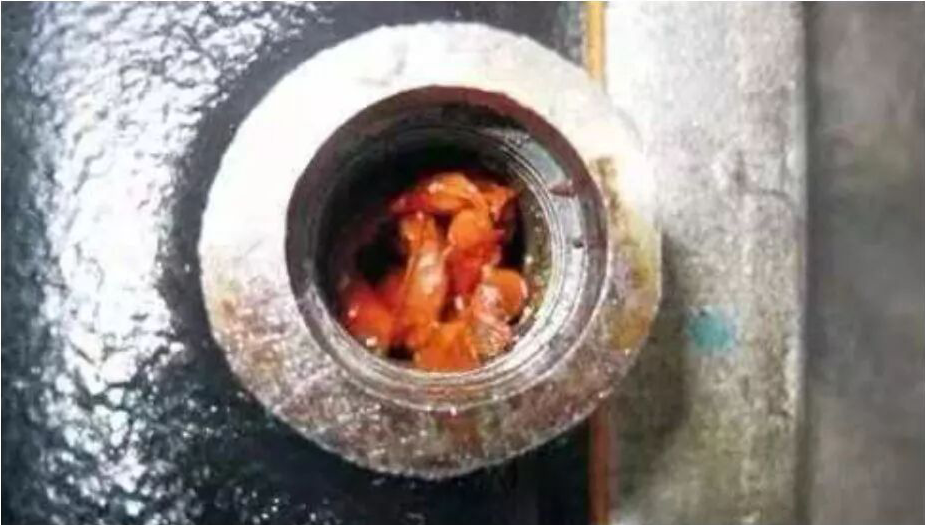
Next, I turned my attention to the check valve located between the cylinder head and block. According to the engine’s oil passage structure, this check valve plays a critical role: it prevents oil in the cylinder head oil passages from flowing back to the main gallery when the engine is turned off. I hypothesized that sealant debris from the engine replacement might have fallen into the oil system and accumulated at this check valve, blocking the passage between the cylinder head and main oil gallery, similar to how oil passage blockages cause issues in P0011 Chevy Cruze models. When I removed the check valve, my hypothesis was confirmed: there was a large amount of red sealant clogging the oil passage.
6. Repair Measures & Fault Resolution
The repair process was straightforward once the root cause was identified: first, I thoroughly cleaned the clogged oil passages to ensure unobstructed oil flow. Then, I replaced the check valve with a new OEM part to restore its function of preventing oil backflow. After reassembling all components, I started the engine and performed a test drive.
The results were perfect: the engine noise during acceleration was gone, and the check engine light did not reappear. I rescanned the ECU, and both the chevy p0011 and P0014 codes were cleared. Monitoring the data stream again showed that the intake camshaft phasing adjustment command had returned to the normal 66% range at idle. Multiple test drives confirmed that the issue was completely resolved, no more codes, no more noise, and the engine performed smoothly.
7. Case Summary & Key Takeaways for Chevy P0011
This case offers valuable lessons for anyone troubleshooting Chevy P0011 (or POO11) codes, regardless of the Chevy model, whether it’s a p0011 chevy equinox, p0011 chevy malibu, or any other Chevy vehicle:
- Don’t overlook post-repair debris: After engine replacement or major engine work, sealant debris or other contaminants can enter the oil system, causing blockages. This is a common but easily missed cause of Chevy P0011.
- Oil pressure checks need to be comprehensive: Normal main oil gallery pressure doesn’t guarantee adequate pressure in all oil passages (like cylinder head passages). Always consider localized pressure issues when diagnosing VVT related faults.
- Use component tests to isolate issues: Disconnecting the camshaft phasing solenoid (as I did here) is a simple yet effective way to confirm if the problem is related to the VVT system.
- Understand system components: Knowing the function of the check valve (preventing oil backflow) was key to solving this case. Familiarize yourself with the oil system layout of the specific Chevy model you’re working on.
Additionally, this case reinforces that Chevy P0011 is often linked to oil system issues, whether low pressure, clogged passages, or contaminated oil, rather than just faulty solenoids or VVT actuators. Taking the time to thoroughly inspect the oil system can save you from unnecessary part replacements and ensure a proper fix.
Final Thoughts
The Chevy P0011 code can be frustrating, but with a systematic diagnostic approach, it’s manageable. Whether you’re dealing with a P0011 Chevy Cruze that’s been driven hard or a P0011 Chevy Impala with post repair issues, always start with scanning codes, analyzing data streams, and checking the oil system. If you’re not comfortable with DIY diagnostics, especially when it comes to disassembling engine components, consult a professional technician with experience in Chevy vehicles.