



P0300 Cadillac Po300: Random Multiple Cylinder Misfire
2025-12-02
In this blog, I’ll share a detailed repair case of a Cadillac plagued by the P0300 fault code (sometimes written to Po300), a frustrating issue many Cadillac owners might face, whether you drive a P0300 Cadillac Escalade, P0300 Cadillac Deville, or P0300 Cadillac CTS. The owner reported body shaking, weak acceleration, along with illuminated engine and TCS warning lights. What started as a hunt for the cause of po300 (random multiple cylinder misfire) led me through a step-by-step diagnostic process, ultimately uncovering a damaged piston as the root culprit. I’ll break down the symptoms, code analysis, key inspections, and the repair that fully resolved the issue.
Fault Symptoms: Shaking, Weak Acceleration & Warning Lights
The owner brought the Cadillac in with three main complaints: noticeable body shaking, sluggish acceleration, and two warning lights on the instrument panel, the engine malfunction light and the TCS (Traction Control System) fault light. These symptoms are classic red flags for engine performance issues, and when combined, they often point to misfire-related problems, which aligns with the common manifestations of p0300 (random multiple cylinder misfire) in Cadillacs, including models like the Cadillac Escalade, Deville, and CTS.
Initial Diagnosis: Retrieving Trouble Codes (P0299, P0300, P1101)
My first step was to connect a diagnostic scanner to the vehicle’s OBD system to retrieve trouble codes. The results showed three codes: P0299, P0300, and P1101. Let’s break down the initial analysis of each code:
- P0299: This code indicates "Turbocharger/Supercharger Underboost Condition." Based on this, I initially suspected the engine was suffering from insufficient boost pressure.
- P0300: As the core focus of this case, P0300 stands for random multiple cylinder misfire. This code confirmed my initial hunch that misfiring was a key issue, and from experience, random multiple cylinder misfire is typically the primary cause of body shaking in such scenarios, a common link across p0300 Cadillac cases.
- P1101: This code relates to intake air flow performance issues. I hypothesized early on that this code was a secondary issue triggered by the primary faults affecting the intake system’s performance, so I planned to prioritize P0299 and P0300 first and potentially ignore P1101 once the main problems were resolved.
Inspecting for P0299: Low Boost & Unexpected Oil in Intake Manifold
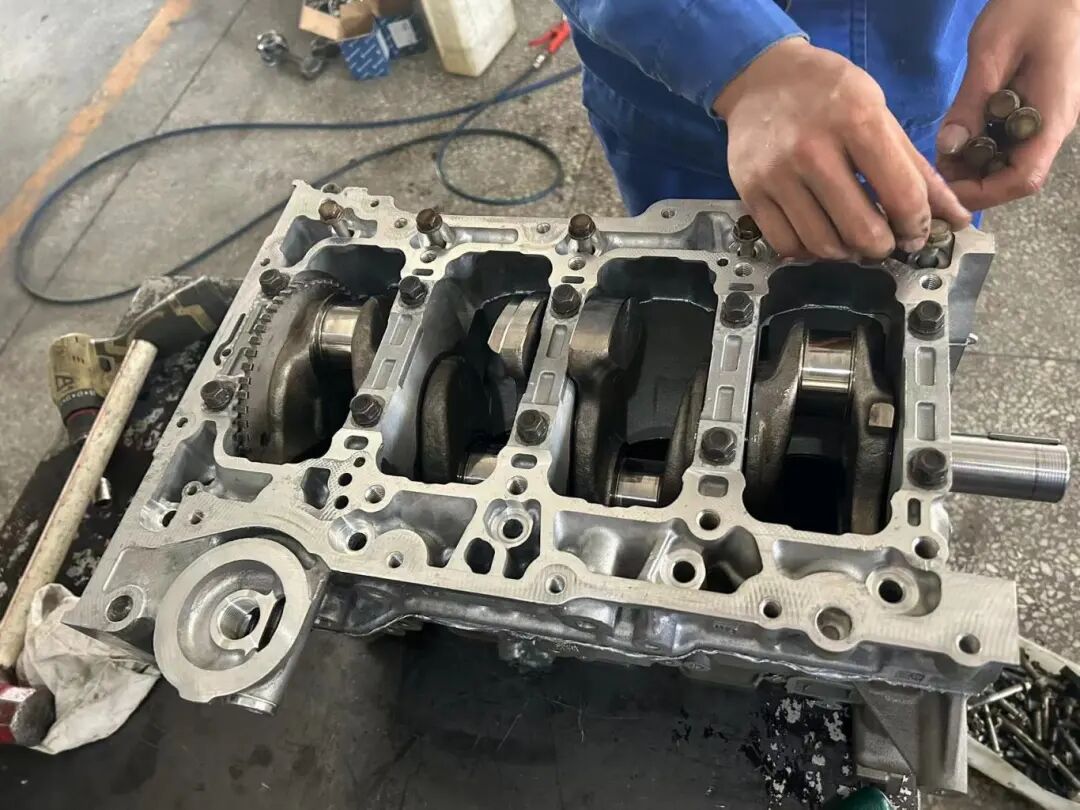
To address P0299 (underboost), I inspected the intake manifold first. To my surprise, I found a significant amount of engine oil inside the manifold. This prompted me to check the engine oil level using the dipstick, and sure enough, the oil level was below the recommended range. From this, I concluded that the oil in the turbocharger pipes (a key component related to boost pressure) was a result of an underlying engine fault, not a standalone turbocharger issue. This finding shifted my focus more intensely to the engine’s internal condition, which I suspected was also linked to the P0300 misfire code.
Deep Dive into P0300: Locating the Misfiring Cylinder
Since P0300 (random multiple cylinder misfire) was the likely cause of the body shaking, I made this the priority of my diagnostics. I accessed the vehicle’s data stream using the diagnostic scanner and found a clear misfire in cylinder 2. Next, I focused on the engine’s ignition system, a common culprit for misfires, which includes spark plugs, ignition coil control circuits, and the engine control unit (ECU).
I first tried swapping the ignition coil of cylinder 2 with another cylinder and test-drove the vehicle, but the misfire persisted. This ruled out a faulty ignition coil. I then removed the spark plug from cylinder 2 and discovered it was covered in a large amount of engine oil, another red flag. I replaced the oil-fouled spark plug with a new one and test-drove again, but the misfire and shaking still didn’t go away. This meant the issue wasn’t with the ignition system; it was deeper in the engine.
Cylinder Pressure Test: Confirming a Severe Cylinder Issue
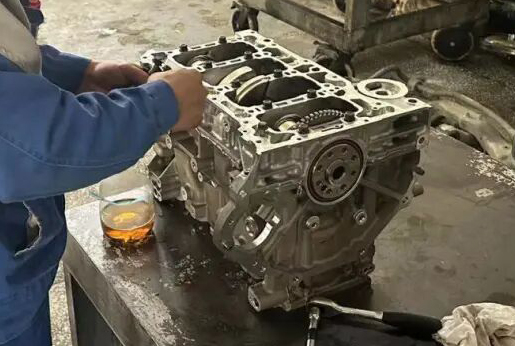
To further diagnose the problem, I used a cylinder pressure gauge to measure the compression of cylinder 2 and cylinder 3 (as a reference). The results were striking: cylinder 2 had almost 0 bar of compression, while cylinder 3 measured a normal 10.5 bar. This massive discrepancy confirmed that cylinder 2 had a severe internal mechanical failure, which was the root cause of both the misfire (P0300) and the related performance issues.
Tearing Down the Engine: Uncovering Damaged Piston Rings
Based on the cylinder pressure test, I narrowed down the potential fault causes to three possibilities: damaged valves, worn piston rings, or severely worn cylinder liners leading to excessive valve clearance. I proceeded to disassemble the engine to find the exact issue.
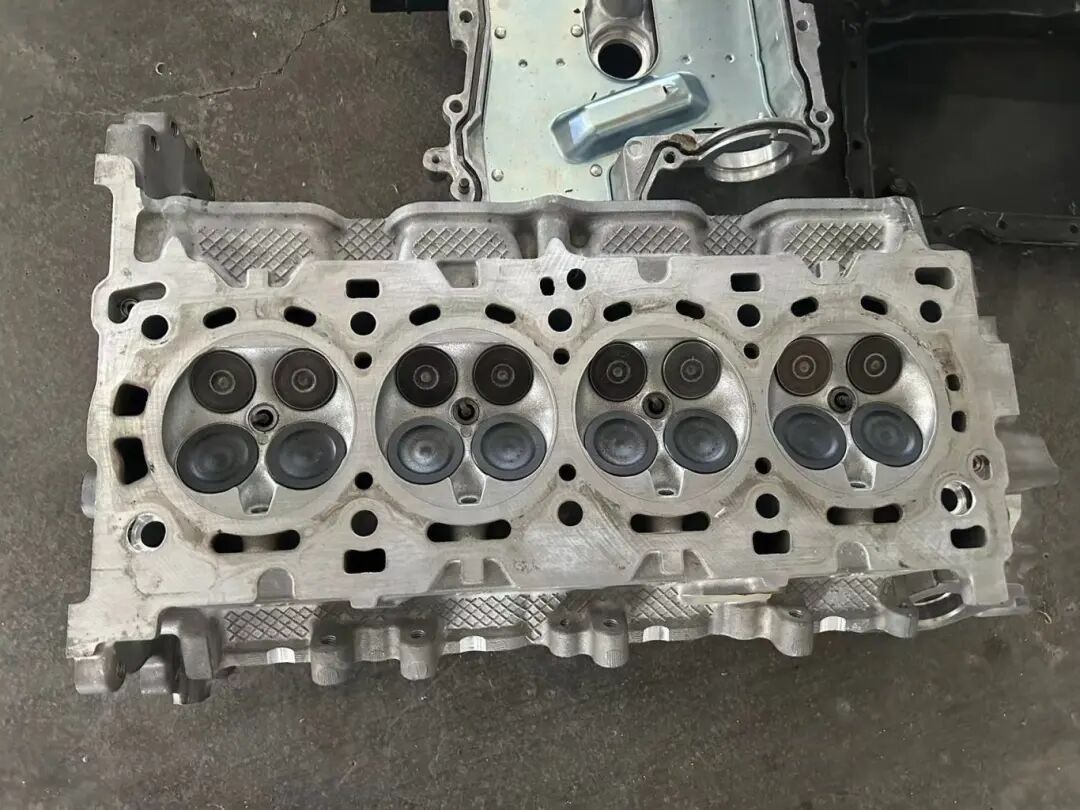
When I removed the cylinder head, I found no abnormalities with the valves, they were in good condition. However, when I disassembled the pistons, I discovered that the first piston ring groove of cylinder 2 was damaged. This was the definitive root cause of all the vehicle’s problems: the damaged piston in cylinder 2 led to low compression, causing the misfire (P0300), weak acceleration, and body shaking. It also explained the oil in the intake manifold and the subsequent P0299 and P1101 codes.
Repair & Fault Resolution: Restoring Engine Performance
To fix the issue, I replaced the damaged piston with a complete set of new pistons, bored the cylinder, and installed a new cylinder sleeve. After reassembling the engine, I test-drove the vehicle, the results were perfect. The engine ran smoothly, the body shaking completely disappeared, and the engine fault light and TCS system fault light turned off. I rechecked with the diagnostic scanner, and no fault codes were present. The malfunction was 100% resolved.
Key Takeaways for P0300 Cadillac Owners
This case highlights an important point for anyone dealing with a P0300 Cadillac (whether it’s a p0300 Cadillac Escalade, p0300 Cadillac Deville, p0300 Cadillac CTS, or another model): while P0300 is labeled as a random multiple cylinder misfire, it’s crucial to dig deeper than just the ignition system. Secondary codes like P0299 and P1101 may be symptoms of a larger internal engine issue, not standalone problems. Always follow the diagnostic trail, from symptoms to codes to physical inspections, and don’t stop at surface-level fixes. In this case, the real issue was a damaged piston, and addressing that resolved all the other related faults.